
Dental Bridges – Orange Park
Fill the Gap in Your Smile
When you are missing a single tooth, it can have a significant impact on your quality of life. Having gaps in your smile can make it challenging to complete daily tasks that you once found easy, like chewing your food, speaking clearly, and smiling without feeling self-conscious about your smile. At Crovatto & Edwards Family Dentistry, we offer dental bridges to help you show off a complete smile again. To learn more about dental bridges or to schedule your consultation, don’t hesitate to give us a call!
Why Choose Crovatto & Edwards Family Dentistry for Dental Bridges?
- State-of-the-Art Dental Technology
- Customized for Each Patient
- We Welcome Dental Insurance
What Is a Dental Bridge?

Dental crowns are made to preserve damaged teeth. Dental bridges work in a similar way, but they are designed to replace one or more consecutive missing teeth. The restoration is made from two crowns located on either side of the replacement teeth. The dental crowns act as anchors that are placed on the two teeth on either side of the gap in your smile to secure the restoration in place. Just like dental crowns, bridges are customized from natural-looking materials that blend in with the surrounding teeth.
Types of Dental Bridges
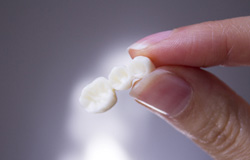
There are two main types of dental bridges to meet a variety of needs. Here is how each of them works.
Traditional Dental Bridge
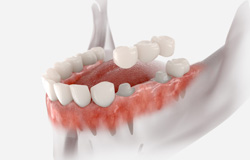
If you have healthy teeth on either side of the gap that needs to be filled in, a traditional dental bridge may be the solution. The tooth that supports the dental crown is called the abutment tooth, and it is altered slightly so the bridge fits perfectly in your mouth. This type of restoration can be placed in just a couple of visits to the dental office and is the more affordable option of the two.
Implant Bridge
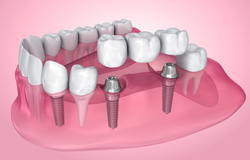
If you don’t have healthy adjacent teeth, surgically implanted metal posts, called “dental implants,” make a great alternative, surgically implanted metal posts, called “dental implants,” make a great alternative. Dental implants can be used when there are three or more missing teeth in a row. Implant bridges tend to last longer than traditional bridges on average, and they help to prevent bone loss over time.
The Benefits of Getting a Dental Bridge

Here are some of the benefits that you can enjoy when you get your dental bridge.
- Prevents surrounding teeth from shifting around
- Improves overall confidence and self-esteem
- Allows for thorough chewing
- Improves speech articulation
- Lowers risk of oral health issues
- Cost-effective tooth replacement options
Dental Bridges FAQs
How Long Should a Dental Bridge Last?
The lifespan of a dental bridge usually falls somewhere in the range between 5 and 15 years. Generally speaking, the care you give your dental bridge can have a significant influence on how long it lasts. If you want to be able to keep your prosthesis for as long as possible, you should:
- Maintain good oral hygiene by brushing at least twice a day and flossing daily.
- Limit your intake of hard or sticky foods that could potentially damage your dental bridge.
- Break bad habits that can put your dental bridge at risk, such as chewing on your fingernails or crunching ice cubes.
How Many Teeth Can a Dental Bridge Replace?
It’s possible to replace as many as four teeth in a row with a traditional dental bridge. That being said, longer bridges tend to be less stable and put more stress on the teeth supporting them. As such, it’s generally best to use a traditional dental bridge to replace just one or two teeth. If three or more teeth in a row are missing, implant dentures tend to be the more reliable option thanks to the significantly better stability provided by the implant posts.
Can Dental Bridges Be Whitened?
No, dental bridges cannot be whitened the same way your natural teeth can. Unlike enamel, dental bridges are non-porous; this means that there’s no way for the bleaching agents used for professional whitening to enter the prosthesis and remove stain particles.
If you’re planning on having your teeth whitened, it may be a good idea to have the procedure performed before you receive your dental bridge. This will allow your dentist to customize your prosthesis so that it matches your newly brightened smile.
How Do I Clean Under My Dental Bridge?
It can be all too easy for harmful bacteria to gather in the space beneath your dental bridge. Over time, this can lead to cavities in the abutment teeth as well as gum disease. To protect your smile, you should to make a point of cleaning underneath your dental bridge.
One way to do this is to guide a piece of traditional floss underneath the prosthesis with a threader. If you find this approach too difficult, you might consider using an interproximal brush or a water flosser instead; these tools are useful for cleaning all kinds of tight, hard-to-reach spaces in your mouth.
Are Dental Bridges Covered by Insurance?
Yes, you can often expect your dental insurance plan to help pay for a dental bridge. Many insurance companies are willing to pay around 50% of the cost of the prosthesis. Bear in mind, however, that coverage can vary depending on what plan you have. On top of that, there are several factors that could influence the amount you’re responsible for paying on your own, such as your deductible and your plan’s annual maximum. Our team will be happy to review your insurance plan with you to make sure you understand your benefits.